I’m sure many people had and still have a soft spot for the old Game Boy brick. Huge selection of games and a great battery life was winning combination and definitely suited a kid’s budget. I remember hiding under my bed sheets when I was supposed to be sleeping holding a torch under my chin, the sound muted and playing Mario Land until I crashed out. If I was out and about dragged along on some trip I wasn’t too thrilled about I would have had my Game Boy with me tilting and twisting it at various angles trying to get the best possible image without the sun interfering. I bet I’m not the only one who is guilty of swapping the batteries from the TV remote with the flat ones from my Game Boy. Ok that’s enough about me reminiscing, lets take a look at what the Game Boy had to offer for its time.
Nintendo Game Boy
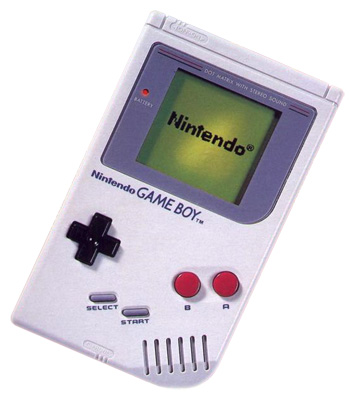
In 1989 Nintendo released a portable gaming system that revolutionised the gaming industry not with outright power and the latest technology but instead using a smart design based on what technology was available at the time. Where other more powerful portable gaming systems struggled with the current commercially available battery technology the Nintendo Game Boy franchise continued to power on for the next three decades. The original Game Boy was the creation of Gunpei Yokoi and his R&D1 team. They took ideas from both the successful Game and Watch series and Nintendo Entertainment System to create a portable gaming system that wasn’t battery hungry, which could be enjoyed by all, priced sensibly and could actually fit into a pocket. Gunpei Yokoi was a highly respected employee of Nintendo and contributed greatly to Nintendo’s success and was involved in the Game and Watch series, The Game Boy, NES, the Metroid series and more. He eventually parted with Nintendo shortly after the Virtual Boy failure and started up his own company.
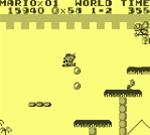
The Original Game Boy was powered by a very modest Z80 processor at 4.19 MHz with an image displayed on a monochrome LCD screen. The maximum resolution that could be displayed was 160 × 144 from a colour pallet of four shades of grey but was viewed as black and green. Sound only emitted through a single speaker built into the unit but stereo sound could be heard via ear phones. For what was available at the time the Game Boy was basically a step backwards in technology, but this lower spec technology was needed in order to sustain a decent battery life and reduce both size and cost. The controls on the Game Boy bared a strong resemblance to the Nintendo Entertainment System control pad. An eight directional D-pad, two action buttons and two selection buttons were used to interact with software. There were also two knobs, one on each side that controlled volume and contrast. For players to engage in multiplayer games a link cable port was located on the side of the unit that connected two Game Boy units together. Two copies of the same game were required to utilize this function and up to four Game Boys could be licked together using the Game Boy Four Player Adapter. All of these features were satisfactory enough for Nintendo to run with the one design with no revisions until the introduction of the Game Boy Pocket in 1996. This was a more compact version of the original using smaller AAA batteries and true black and white screen. The only down fall to the Pocket version was the different shaped link port that was not compatible with the original. There was also slight alteration in casing design prior to the Pocket version in 1995 which was the ‘Play it Load’ multicoloured releases. They retained all hardware identical to the original. The ‘Play it Load’ coloured casing option spawned an ongoing theme of coloured casing variants throughout Nintendo’s line of portable systems and this was even adopted by some of Nintendo’s competitors. The final revision of the Original Game Boy before making the leap to a coloured display was the Game Boy Light which was released in 1997 only in Japan. The Light version was basically identical to the Pocket version but with the inclusion of a back lit screen that could be switched on and off.
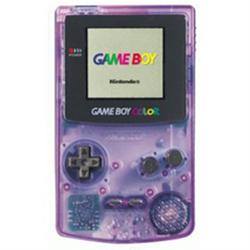
In 1998 Nintendo stopped refining the original Game Boy and gave into the strong consumer demand for a coloured version of the Game Boy. Not only were consumers pushing Nintendo to drop the monochrome display in favour of a coloured version, game developers were also wanting more advanced hardware to work with in order to give more depth to their released titles. So Nintendo responded to the demands and released the Gameboy Color (GBC) which was significant step up from its predecessor. Apart from the obvious introduction of a colour display the GBC had a number of new features. A faster processor, more RAM, games could be up to eight times larger than the original Game Boy thanks to the GBC’s ability to accesses more ROM and multiplayer connection was done via infra red instead of a cable. There wasn’t a great deal of games that used the infra red linking system and Nintendo ended up reverting back to a cable connection for Game Boy Advance. The coloured screen in GBC still had the same resolution as its predecessor but now could display 56 different colours simultaneously from a pallet of 32,768. Now with this extra boost in performance game developers could create games that were virtually on par with Nintendo’s 8bit counter part the Nintendo Entertainment System. Probably the best decision Nintendo could have done with the GBC was making in backwards compatible with all Original Game Boy games. So from the moment the GBC was released it already had a massive catalogue of games to choose from and when an original Game Boy game was used in the GBC a number of colour customizing options could be adjusted. Backwards compatibility was a first for any portable gaming system and the closest thing to it was the Sega Game Gear having the ability to play Master System games but that required additional hardware. From then on all of Nintendo’s portable systems were compatible with games from its previous system.
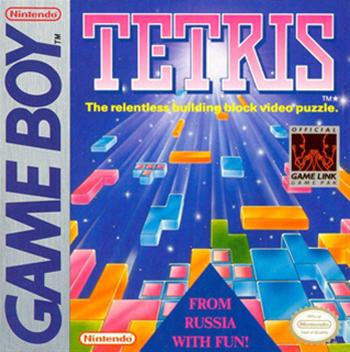
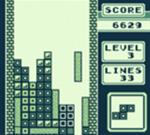
The Game Boy took off with phenomenal success and a large portion of this success was derived from the pack in puzzle game, Tetris. This game was the creation of Alexey Leonidovich Pajitnov a Russian computer engineer that has over time created a number of puzzle type games. Tetris was and still is an addictive puzzle game that requires the player move and rotate various shaped blocks into place to clear lines. Tetris proved to be the perfect partner for the Game Boy as there were many people simply purchasing a Game Boy just for this game. The addictive pace increasing game play accompanied by the catchy theme music (which I’m sure is etched into everyone’s memory by now) is what made this game such a hit. As an added bonus Tetris also was compatible with the multiplayer link cable. This worked out great because anyone with an original Game Boy had a copy of Tetris and a link cable and was all set for a multiplayer game. The Game Boy version alone sold an impressive 33 million copies. Now days there have been ported versions of Tetris on just about anything with a screen and buttons along with a number of different renditions.
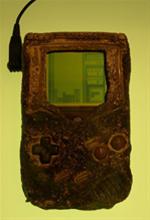
The Nintendo Game Boy captured the hearts and minds of millions of people all around the world and I’m guessing that anyone who has owned a Game Boy will probably have an interesting story or memory involving the system. For example the damaged Game Boy pictured to the left survived the Gulf war and still functions. It has now found a home in the New York Nintendo Word Store. Nintendo and their third party developers offered a huge selection of games to suit a variety of tastes, the Game Boy was accessible too many people thanks to sensible price tag, and you could enjoy hours and hours of uninterrupted game play on a single set of batteries. All of these traits help make the Nintendo Game Boy and Game Boy Color become the highest selling portable gaming system of all time with a worldwide total of 118.7 million units. To put that into perspective the current success of the Nintendo DS has sold over 70 million units.
Game Boy Accessories
When it comes to portable gaming systems there’s always a decent selection of complementary accessories released, even the Atari Lynx had its fair share. We all know the most common accessories are the various alternate power devices such as AC mains adaptors, car cigarette chargers, power packs and so on. To keep your portable system safe and easy to carry when out and about the selection of carry cases seem to be endless, hard case, soft case, small, big, there’s bound to something that suits everyone’s needs, and what would a portable gaming system of this era be with out the mandatory multiplayer adaptor? Of course all of these items plus many more were available for Game Boy. There were a few standout items that weren’t as popular as the more common accessories but definitely worth a closer look.
Comparatively speaking the Nintendo Game Boy is quite large when put next to the current generation of portable gaming systems. For some consumers the size and shape of the original Game Boy was not enough and they wanted something bigger and more comfortable for those long gaming sessions. This is where the aftermarket accessory the Booster Boy comes into play. Brought to you by Saitek the Booster Boy takes what the Game Boy has and amplifies it by encapsulating the Game Boy unit with a feature packed outer shell. A magnifier, light, speakers, cartridge storage, larger buttons and a joystick were some of the options the Booster Boy added to the Game Boy. It does take a lot of the portability element out of the Gameboy due to its sheer size and is more suited to someone wanting a full featured system to play at home. Joyplus also released a Game Boy enhancing device called the Handy Boy. This accessory featured similar options to the Booster Boy but a much smaller scale.
Booster Boy
Super Game Boy and Transfer Pak
The Game Boy collection of games were so popular Nintendo released devices that allowed backward compatibility and data transfer on two generations of their home console line. The Super Game Boy allowed the Super Nintendo to play the entire Game Boy range of games through the system and onto a television. The Super Game Boy also offered a number of customizing options with how you want Game Boy games displayed on the screen. For more information on the Super Game Boy check out this previous Retrospective article here!
The Transfer Pak for the Nintendo 64 was released 10 years after the Game Boy that plugged into the N64 controller. The main purpose of this accessory is to transfer information from a Game Boy color game to its Nintendo 64 counterpart. Games like Mario Golf, Mario Tennis and Perfect Dark opened up a number option such as extra experience points and unlockable items. When the Transfer Pak was used with Pokémon Stadium 1 and 2 the Game Boy versions of Pokemon Red, Blue, Yellow, Gold, Silver, and Crystal could be played on a television performing in a similar to the Super Game Boy.
Transfer Pak
Game Boy Camera and Printer
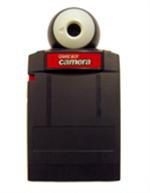
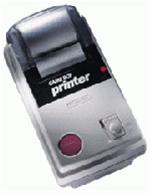
The Game Boy Camera was quite an innovative accessory for its time and gave the humble Game Boy a bit of a multimedia feel to it. Nintendo didn’t intend for the Game Boy Camera to be a fully functional replacement for your generic camera, Nintendo took a more light hearted approach to it with fun being the priority. The Camera and printer was first released in 1998 and designed for the Game Boy Pocket series but was also compatible with the original Game Boy, Game Boy Color, Game Boy Advance and even the GameCube Game Boy Player. The only Game Boy it wasn’t fully compatible with was the Super Game Boy adapter for the SNES, it still worked when plugged in but because there was no game link plug there was no way of connecting the Game Boy Printer. The Game Boy Printer required the game link port to receive image data taken from the Camera and burnt it onto heat sensative paper. These images were not of a high quality and were basically grainy black and white representations of what you just took a picture of. Considering the Camera had only a four colour palette to work with it was doing a decent job for it low price tag. Not only could the printer be used to output the novelty snap shots taken by the camera it was also integrated into some games. Super Mario Bros. Deluxe, The Legend of Zelda: Link's Awakening DX, Donkey Kong Country, and Pokémon Gold, Silver, and Crystal had the option to use the Game Boy Printer. There were even some mini games built into the Camera unit its self.

Game Boy Commercials